
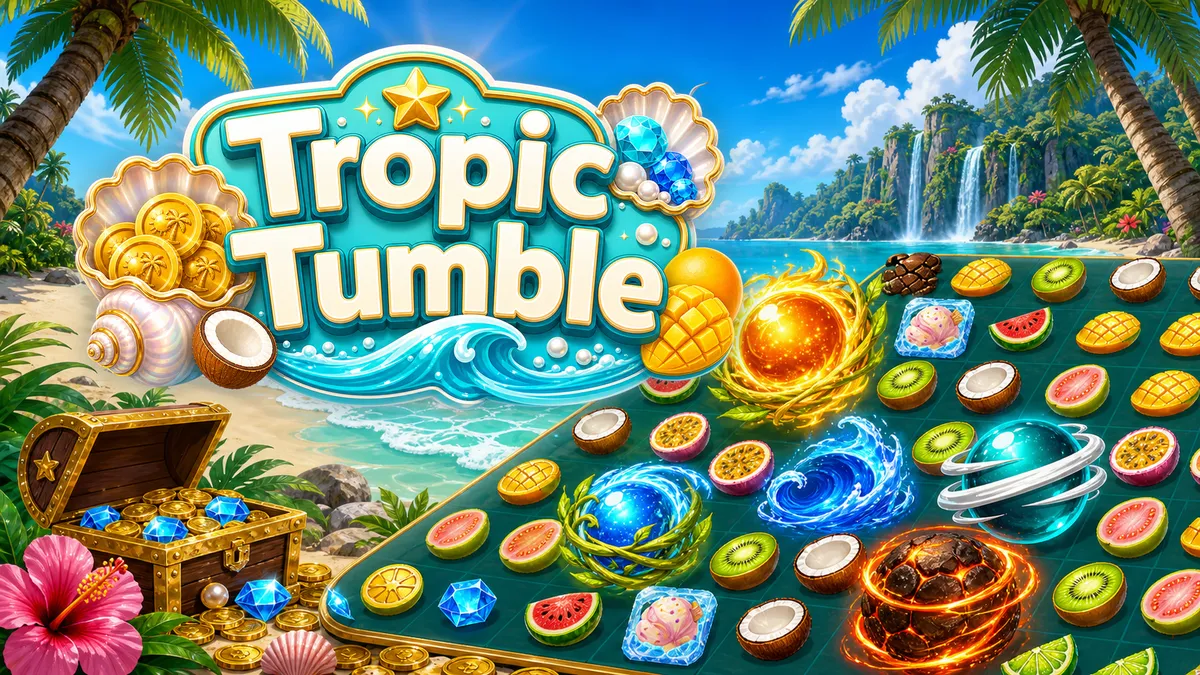
I built a game. It is called Tropic Tumble, it is a tropical match-3 you can actually put on your phone, and as of today it is out in the world.
I picked my birthday to say that out loud, because I am extremely excited and proud of what I have accomplished, and that deserves a date you will remember. A launch is not a clean, cinematic finish line. Nobody hands you a tidy ending when the build compiles and the store form is filled out. It is a slow handover of ownership, from the private version that lived in my head to the public version you can touch, judge, enjoy, break, and maybe tell a friend about.
So here is the public start of the story. Tropic Tumble is a bright match-3 adventure where you swap fruit, trigger elemental powers, clear obstacles, open treasure, and move through a chain of tropical islands one level at a time. I built it under JPott Studios, in Godot, as one person. It is live on Android and iOS. The tagline on the site is the honest pitch: swap, match, and tumble through paradise.
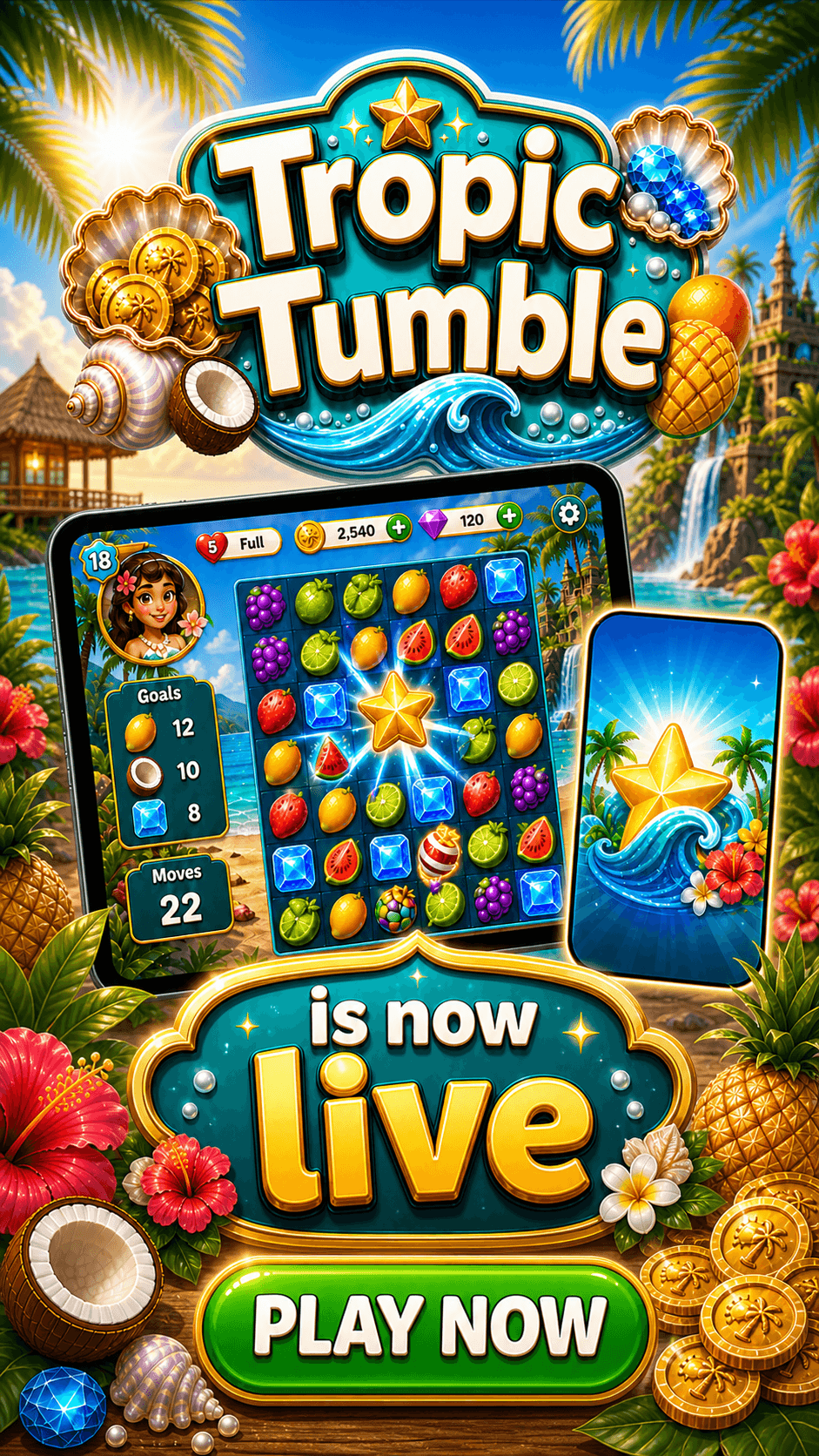
One of the launch creatives. This is the public face of the game: bright, tropical, readable, and about playing now.
What this actually took
I want to be specific, because vague numbers are how people end up either overselling AI or pretending it did nothing. Here is the real shape of it.
It grew from a rough first beta around the middle of April, 15 islands and 150 levels, into the version I am launching now: roughly 300 islands and 3,000 levels, with treasure, missions, a journal, and leaderboards on top, and well over a thousand more islands designed and waiting.
None of that happened because AI is magic. It happened because AI is fast and I was relentless about checking it, and because every decision about how the game feels to play was mine: how lives work, when a hint nudges you, when a new fruit or a pet arrives, what a booster costs you mid-level. I used everything I know from testing products and from playing games myself to make it feel special. That is the whole story, and the rest of this is where it goes.
What you actually play
The basic action is familiar on purpose. You match tiles, clear objectives, and move from level to level. I did not set out to invent a genre nobody understands. I wanted you to arrive already knowing how to play, then slowly feel what makes this one mine.
The world is where that starts. Tropic Tumble is a chain of islands, each with its own look and mood, built around moving through a bright tropical world one challenge at a time.
The powers are elemental, not random, and each one changes how the board behaves:
- Wind
- Water
- Solar
- Volcano
- Earth
The boosters are tools you reach for when a level is fighting you:
- Hammers
- Power drops
- Cutters
- Relocates
That world mattered to me. I am Jamaican, and I know what it feels like to see the Caribbean flattened into a stock-photo beach. I did not want that. I wanted something joyful and colourful that still came from real affection for island spaces, not from a prompt that said “tropical mobile game, colourful, casual.”
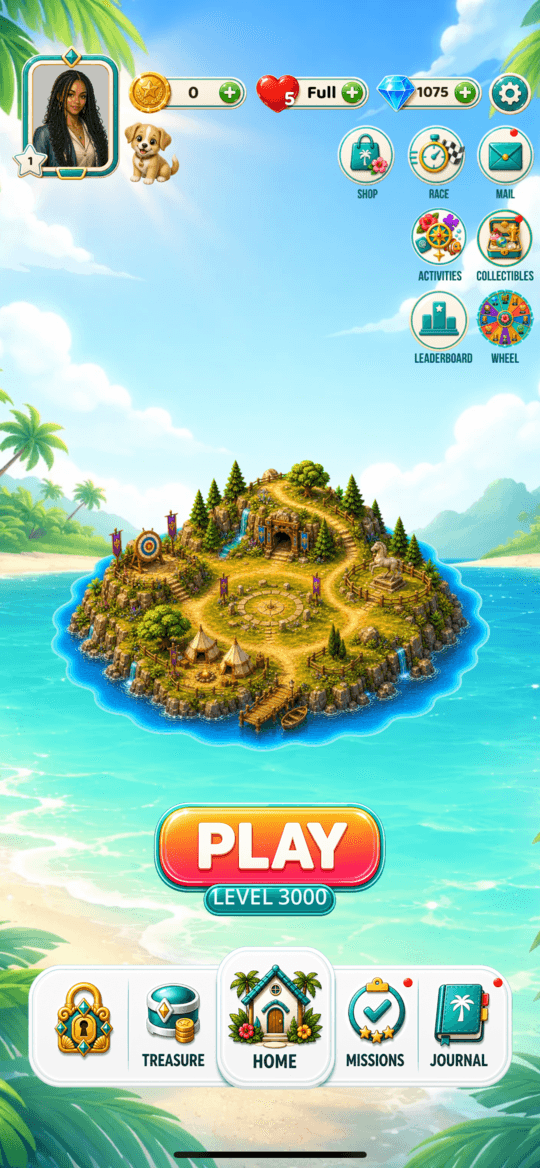
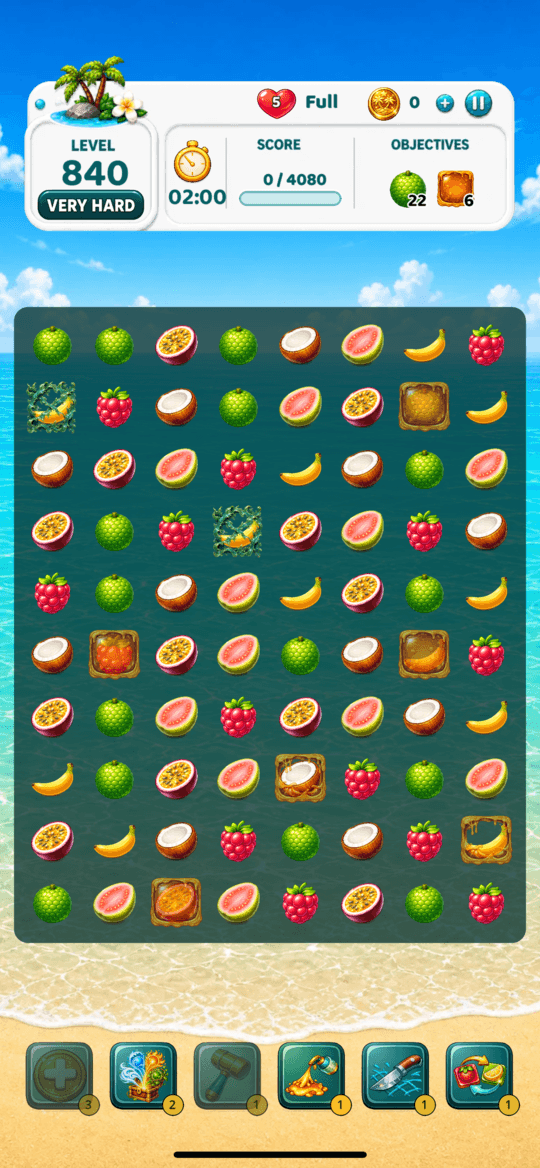
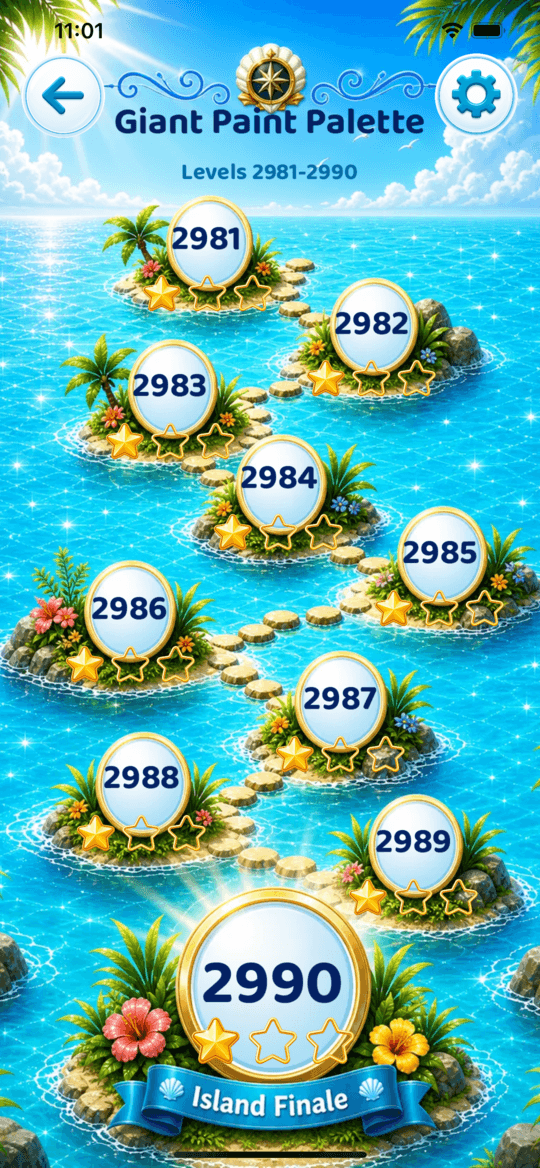
The public game is the hub, the board, and the island path working together. This is closer to what players actually move through: choose where you are, play the level, then come back to the world.
How it actually got made
It started as a rough board with flat colours and fruit names typed into blocks, and grew into the game above. That whole distance, prototype to product, is the build log in how I built a mobile game with AI agents. Here I only want the shape of it.
The first miracle was momentum, not polish. AI got me from idea to playable in days, and that speed was real. But speed is not launch. Launch is the hundred boring truths after the first board:
- Does the game save if the app is killed?
- Does a purchase grant once and only once?
- Does the leaderboard show real people?
- Does it feel fair?
I did not use one AI to get through that. I ran a handful of tools like a small studio and stayed the gate on all of it.
The part QA taught me is that AI is uneven. It was strong behind the screen, tracing flows and combing logs faster than I could, and weak at seeing, so on a mobile game running across a dozen screen sizes I had to be the eye. And it lies politely.
The bug I think about most is the board quietly cheating, invisibly shuffling tiles to fabricate matches the player never made. Nothing crashed. Every test was green. The board looked fine. It was just lying.
I caught it, fixed it, and the board plays straight now, so every match is one you actually made. That is where the project stopped feeling like a factory line I was managing and became mine again.
I am telling that story properly across the series: the full build log above, the system behind the agents in how I run three AI coding agents like a one-person studio, the real match-3 mechanics and fairness rules, and the screens, art, and music workflow.
What I hope you see when you open it
I hope you see a fun little game first. I do not want this to become only a case study, because a game that exists only to prove a point is not really a game. I want you to open Tropic Tumble because it looks bright and inviting, play a few levels, unlock the next island, and feel a small lift in your day.
Behind that, yes, I hope you see the point too.
- QA people: I hope you see that your skills are builder skills, that finding risk, defining done, testing on a real device, and challenging a green checkmark is the exact reason I could ship this at all.
- People using AI tools: I hope you see that the human part is not disappearing, it is moving, toward direction, judgment, verification, and taste.
- Caribbean builders: I hope you see one more example of someone making something from here, with the colour and warmth of here, without waiting for permission or a perfect team.
So, this is the launch
Today I am letting Tropic Tumble be public in a different way.
Not perfect. Public.
Not finished forever. Launched.
Not proof that AI can replace a team. Proof that a person with taste, QA instincts, stubbornness, and the right tools can build further than she could before.
If you want to play it, it is live now: tropictumblegame.com/get. And if you are here for the building story, stay close, because I am going to tell it properly.
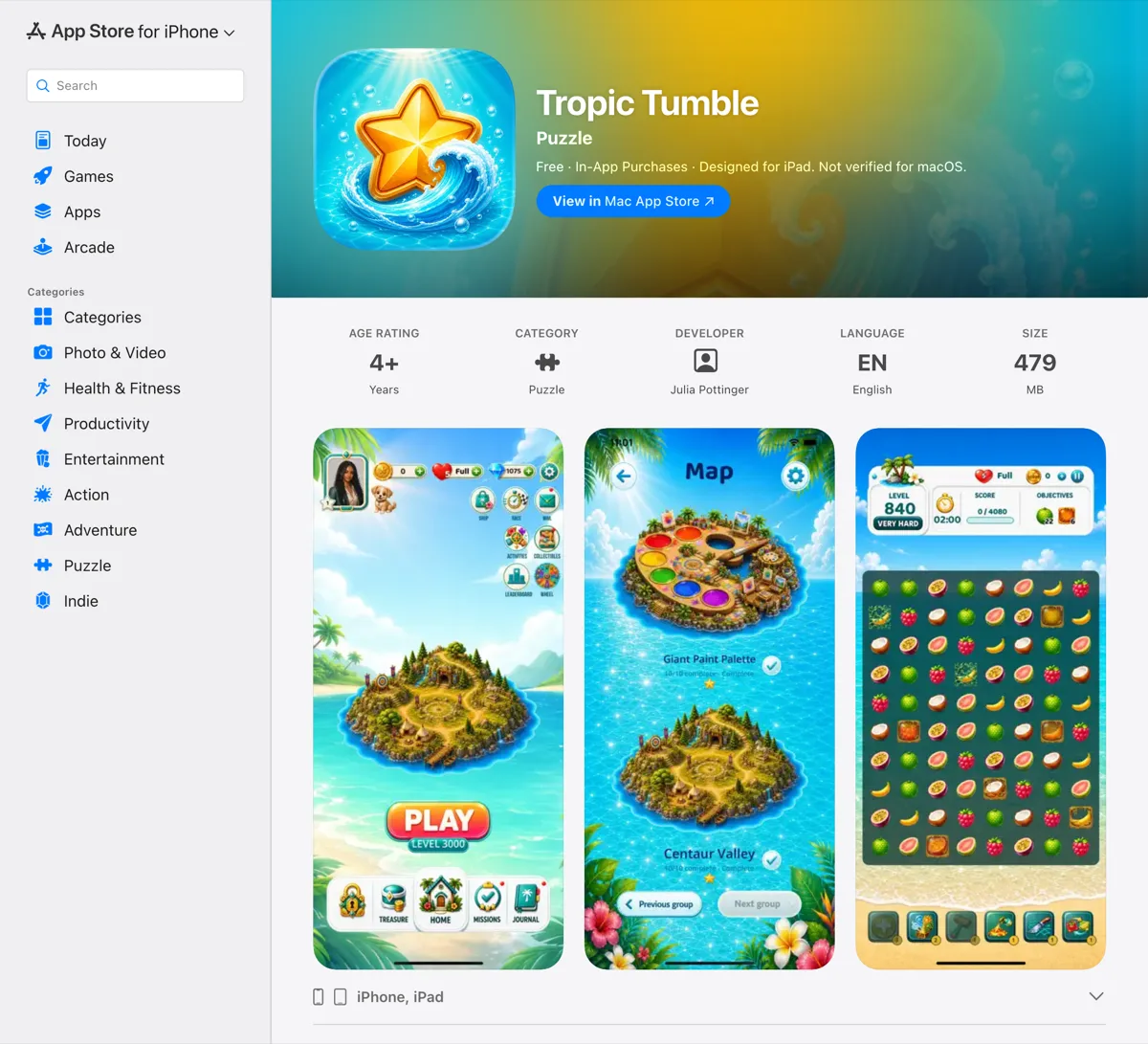
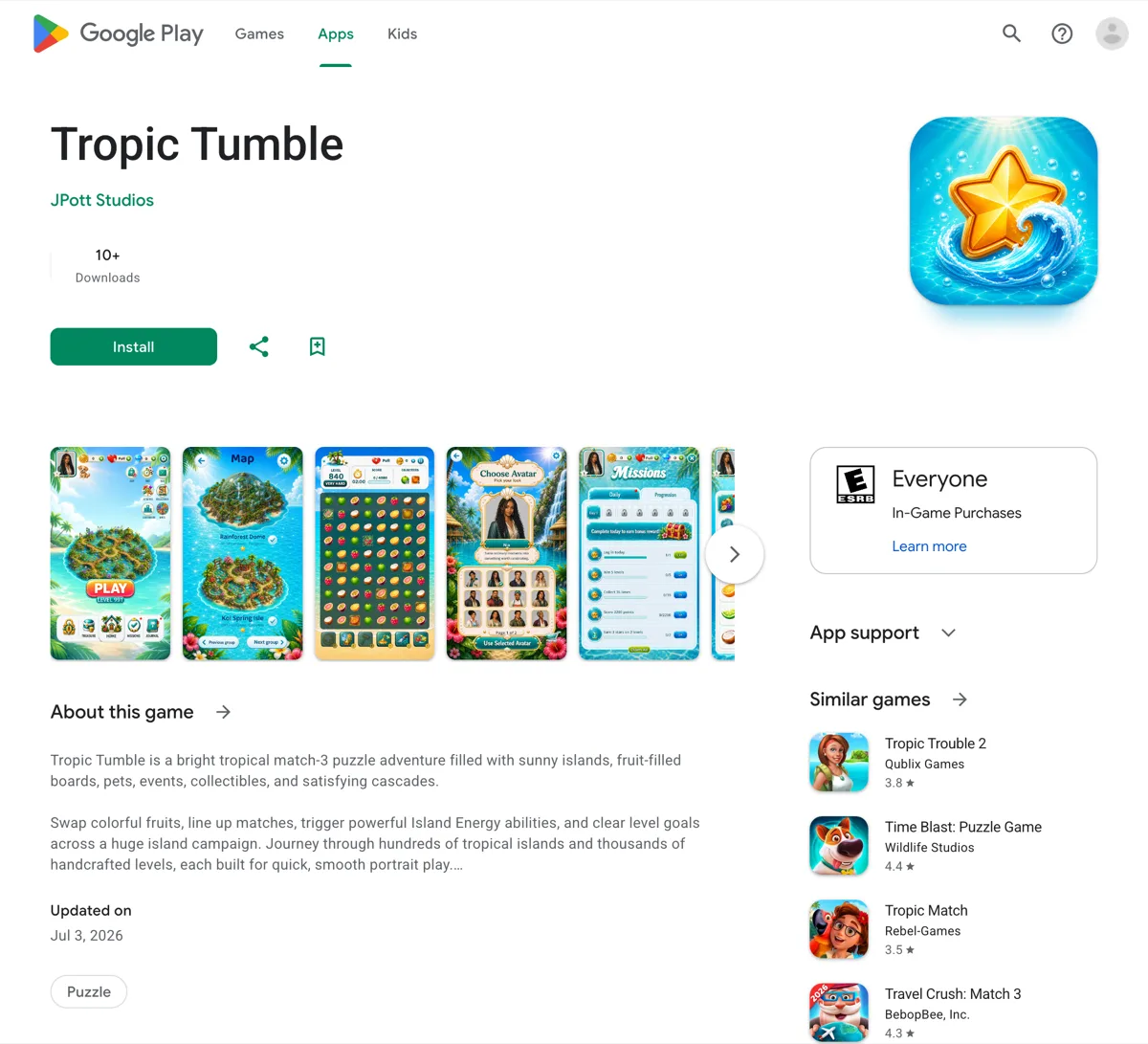
The real listings, captured the day after launch: Tropic Tumble on the App Store and on Google Play, under JPott Studios. Still surreal to me.
The game is out in the world now.
So am I, a little.
Build the thing privately for as long as you need to learn what it is. Then pick a day and let it meet people. Launch is not when the work becomes perfect. Launch is when the work becomes honest.

Written by
Julia Pottinger
Hi, I'm Julia. I've been in QA for over a decade. I spend my days testing software and my own time building apps and games, and I write here to share what I learn, the practical, honest lessons you can actually use.

Comments 0
Share your thoughts, ask questions, or add to the conversation.